


Hostas
Hostas are the finest foliage plant for a shady spot, grown for bold leaves in blue, gold, green and bright variegation that fill the border from spring to autumn. They are fully hardy, thrive where little else will, and return bigger every year.
Showing 1 - 12 in 12 items
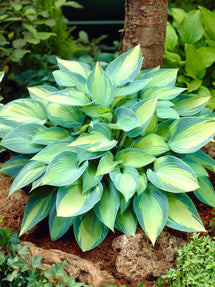
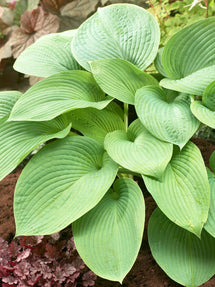
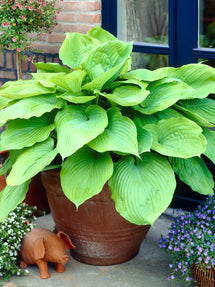
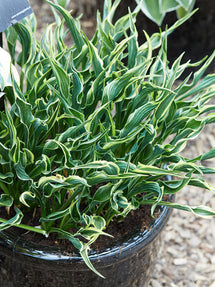
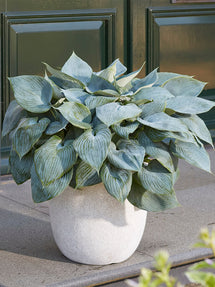
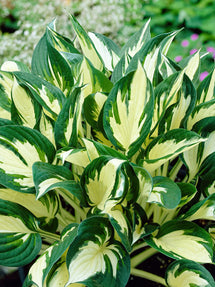
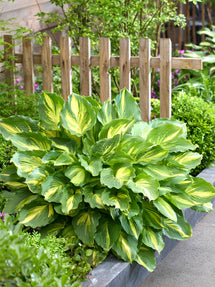
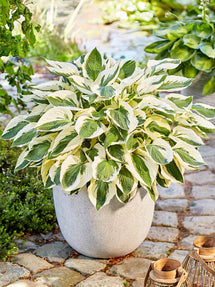
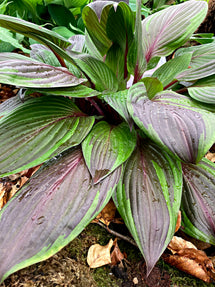

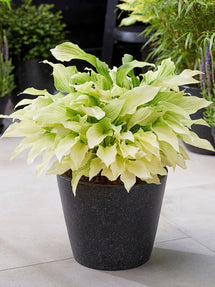
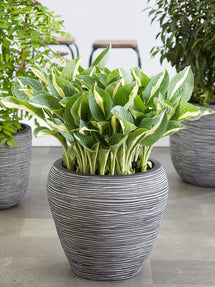
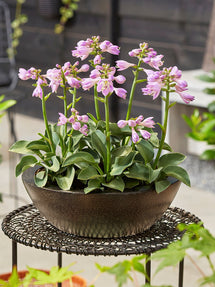
Hostas: sculptural foliage that brings shade to life
No plant furnishes a shady spot quite like the hosta. Grown above all for its bold, beautifully shaped leaves, it builds a lush mound of blue, gold, green and brightly variegated foliage that lasts from spring to autumn. In mid to late summer it adds tall spikes of lily like lavender or white flowers, some of them softly scented.
Hostas grow from a hardy perennial crown that you plant in spring. They thrive in the one place so many flowers will not, partial to full shade, and come back bigger and better every year with almost no care. For a bombproof place to start, the thick leaved Bullet Proof lives up to its name.
Which hosta suits you?
 Giant hostasStatement plants for a shady corner. T-Rex makes a vast mound of deeply ribbed green leaves well over a metre across, chartreuse Sum and Substance glows gold in light shade, and upright Red Ninja sets green leaves against striking red stems.
 White and green variegatedThe brighteners for a dark spot. Patriot rims each dark green leaf with a clean white margin, Fire and Ice reverses it with a pure white centre and dark edge, and White Feather astonishes by emerging almost entirely white in spring before greening up.
 Gold and chartreuseSunshine for the shade. Whirly Pop ripples in gold and green with wavy, twisting leaves, while the compact Lakeside Paisley Print paints a creamy gold heart inside a neat green frame.
 Blue and slug resistantThick, waxy, blue toned leaves that slugs find much harder going. The miniature Blue Mouse Ears forms a tiny cushion of round blue leaves, and the aptly named Bullet Proof is as tough and substantial as hostas come.

Foliage and the gardening year
Plant the crowns in spring. Hostas are grown above all for their foliage, which fills the shade from spring to autumn, with spikes of flowers in mid to late summer.
Position and soil
Hostas are the classic plant for shade and partial shade, perfect under trees, beside a north wall or in any cool corner. They take morning sun happily but dislike scorching afternoon heat.
Give them a rich, humus rich soil that stays reliably moist but not waterlogged. Dig in plenty of compost before planting, and the leaves will grow larger and more lush for it.
How to plant
- Plant the crowns in spring, in partial to full shade.
- Dig a generous hole and set the crown just below the surface.
- Spread the roots out, firm back the soil and water in well.
- Space plants to suit the variety, from 30 cm for minis to 90 cm for giants.
- Mulch around the crown to lock in moisture and keep slugs at a distance.
Our tip: slugs and snails are the one real enemy of the hosta, and the best defence is built into the plant. The thick, waxy, blue leaved and heavily textured sorts, like Blue Mouse Ears and Bullet Proof, are far tougher for a slug to chew. Guard the soft young shoots as they push through in spring, keep the crown clear of old leaves, and in a pot you can keep slugs off almost completely. After a few years, lift and split a crowded clump in spring and you have free plants for every shady corner.
DutchGrown, specialists in flower bulbs and perennials since 1882Year after year
Hostas are fully hardy and wonderfully long lived. They die back in autumn, rest through winter and unfurl fresh new leaves each spring, the clump growing fuller and more striking season by season.
Want more plants, or has a clump outgrown its spot? Simply lift and divide it in spring with a spade. Each piece quickly grows away into a handsome new plant.
Lovely with
Hostas belong in the shade garden, among other woodland perennials. They look superb beside the silver spotted leaves of Lungwort and the airy plumes of Astilbe, which love the same cool, moist soil.
Just as fine threaded through the blue spring haze of Brunnera and the dangling hearts of Bleeding Hearts for a classic shady border.
Order now, plant in spring
You can order hostas now. We ship the crowns from March, in good time for spring planting. They settle in fast and grow larger every year.
Shipped fresh from the Netherlands, by a family business since 1882.
Frequently asked questions about hostas
Are hostas grown for flowers or foliage?
Above all for their foliage. Hostas form sculptural mounds of beautifully shaped and coloured leaves, from blue and gold to boldly variegated, that carry a shady spot from spring to autumn. They do also flower, sending up tall spikes of lily like lavender or white blooms in mid to late summer, some of them scented.
What position do hostas need?
Hostas are the classic plant for shade and partial shade, which is exactly where so little else will grow well. Morning sun is fine, but they dislike hot afternoon sun that scorches the leaves. As a rough guide, gold and chartreuse sorts take a little more light, while blue hostas keep their colour best in cooler shade.
How big do hostas grow?
It ranges enormously. The miniature Blue Mouse Ears makes a cushion only 15 to 20 cm high, while giants such as T-Rex and Sum and Substance build vast mounds well over a metre across. Check the height on each variety's page and give the big ones room to spread.
Are hostas hardy and perennial?
Yes, hostas are fully hardy, long lived perennials. They die back completely in autumn, rest over winter and push up fresh leaves every spring. A well placed clump only grows bigger and more handsome year after year, and can stay put for decades.
How do I stop slugs eating my hostas?
Slugs and snails are the one real enemy of the hosta. The thick, waxy, blue leaved and heavily textured sorts, such as Blue Mouse Ears and Bullet Proof, are far more resistant. Beyond that, protect the young shoots as they emerge in spring, keep the crown clear of debris, and growing in pots makes slugs much easier to keep off.
Can I grow hostas in pots?
Very well, and the whole collection is suited to pots. A container shows off the foliage beautifully, lets you move the plant to the perfect shady spot, and makes it far easier to keep slugs at bay. Use a good, moisture retentive compost and never let the pot dry out in summer.
When and how do I plant hosta roots?
Plant the bare roots in spring, in rich, humus rich soil that stays moist. Dig a generous hole, set the crown just below the surface, spread the roots out and firm back the soil. Space plants according to their eventual size and water in well while they establish.
Are hostas toxic?
Hostas contain saponins and are toxic to cats, dogs and horses if eaten, causing vomiting and an upset stomach, so it is worth keeping pets from nibbling them. For people they are not poisonous; the young spring shoots are in fact eaten as a vegetable in Japan, where they are known as urui.