


Papaver (Oriental Poppy)
Showing 1 - 17 in 17 items
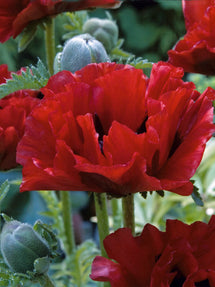
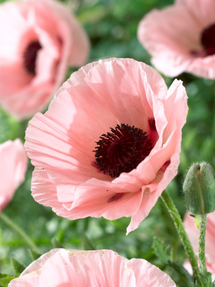
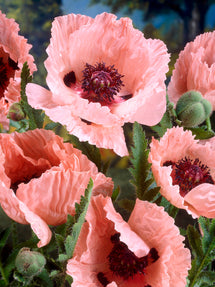
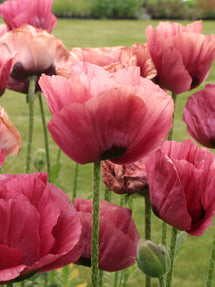
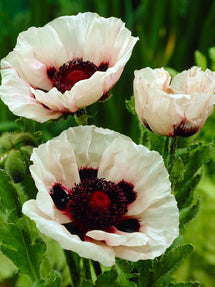
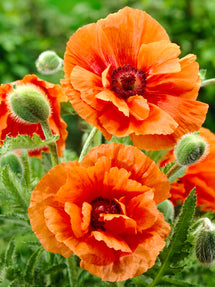
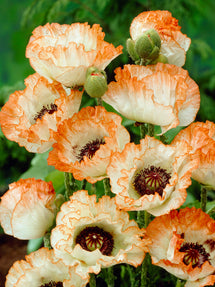
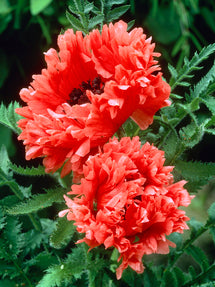
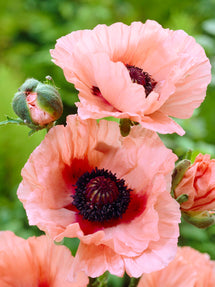
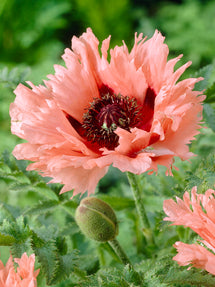
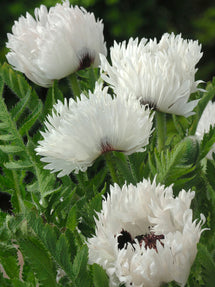
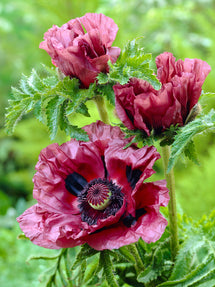
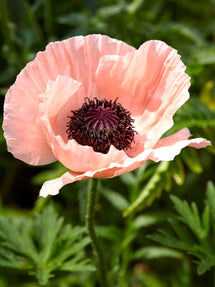
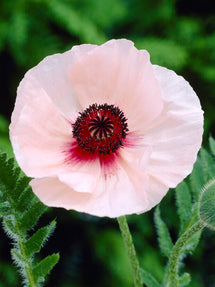
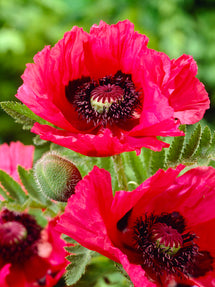
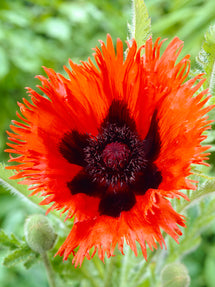
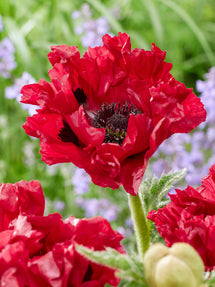

Oriental poppies (Papaver): huge, silken blooms for early summer
Few flowers make an entrance like the Oriental poppy. In late spring and early summer it unfurls enormous, bowl shaped flowers of crinkled, crepe paper petals, in blazing red, soft pink, glowing orange, pure white and smoky plum, most with a dramatic dark blotch at the heart and a boss of velvety black stamens.
Oriental poppies grow from a hardy perennial root that you plant in spring. They love full sun and sharp drainage, come back bigger every year, and are a cottage garden classic. For sheer drama, the towering scarlet King Kong is hard to beat.
Which poppy suits you?
 Red and scarletThe classic fiery poppies. Towering King Kong in huge scarlet, ruffled Garden Glory, deep Watermelon, the fringed Curlilocks and the fully double Red Rumble, all with the poppy's signature dark heart.
 Soft pinkGentle and romantic. The old favourite Mrs Perry in soft salmon pink, the blotch free Helen Elizabeth, delicate Karine and Forncett Summer, all wonderful for a soft, cottage garden scheme.

 Orange and picoteeA glow of warm colour. The double, tangerine Harvest Moon and the striking Picotee, its white petals brushed with a bright orange ruffled edge. Both light up a sunny border in early summer.
 White and smoky plumFor something different. The famous, dusky Patty's Plum in smoky mauve, crisp Perry's White with a deep maroon heart, and the pure, frilled White Ruffles, all cool and elegant among the hot colours.
Flowering and the gardening year
Plant the roots in spring, flowering in late spring and early summer. After flowering the plant dies back for summer, then returns with fresh leaves in autumn.
Position and soil
Oriental poppies want full sun and, above all, sharp drainage. An open, sunny spot in a soil that never sits wet in winter is exactly right, and they are perfectly happy in poorer, drier ground.
Heavy, waterlogged soil is the one thing that kills them. On clay, work in plenty of grit before planting. They form a deep taproot and resent being moved, so choose the spot with care.
How to plant
- Plant the roots in spring, in a sunny, well drained spot.
- Dig a generous hole and set the crown just below the surface.
- Space plants 45 to 60 cm apart; they make broad clumps.
- Firm the soil and water in well.
- Choose the position carefully, as they dislike being moved later.
Our tip: do not be alarmed when your poppy vanishes in midsummer. Once the spectacular display is over, the whole plant yellows and dies back into summer dormancy, leaving a bare gap, and then pushes up fresh leaves again in autumn. The trick is to plant a later neighbour just in front, such as a hardy Geranium or an airy perennial, which grows up to fill the hole exactly as the poppy fades. Cut the old poppy foliage away once it has gone over, and look forward to it all again next spring.
DutchGrown, specialists in flower bulbs and perennials since 1882Year after year
Oriental poppies are hardy and long lived. The same plant returns year after year, building into a bigger, more generous clump, and flowering more freely as it matures. On the right sunny, well drained spot it can stand for many years.
Because they resent disturbance, there is no need to lift and divide them. If you would like more plants, take root cuttings while the plant is dormant in summer, rather than splitting the clump.
Lovely with
Oriental poppies belong in the early summer cottage border, among other tall, bold flowers. They look magnificent beside stately Lupins, which flower at exactly the same time.
Just as fine with the elegant blooms of Iris alongside, and a hardy Geranium at their feet to fill the gap once the poppies die back for summer.
Order now, plant in spring
You can order Oriental poppies now. We ship the roots from March, in good time for spring planting. Many flower in their first early summer.
Shipped fresh from the Netherlands, by a family business since 1882.
Frequently asked questions about Oriental poppies
When do Oriental poppies flower?
Oriental poppies flower in late spring and early summer, roughly through May and June. The flowers are short lived but utterly spectacular, huge bowls of crepe paper petals that open in succession over a few glorious weeks.
Why does my poppy disappear in summer?
This is completely normal and nothing to worry about. After flowering, the Oriental poppy dies back and goes dormant for the summer, so the foliage yellows and vanishes, leaving a gap. Fresh new leaves then appear again in autumn and sit through winter, ready to flower the following spring.
What position and soil do they need?
Full sun and good drainage, above all. Oriental poppies love an open, sunny spot and a soil that is never waterlogged in winter, which is the main thing that kills them. They are not fussy about fertility and cope well with poorer, drier ground.
How tall do Oriental poppies grow?
Most reach around 60 to 90 cm in flower, with the biggest, such as King Kong, nearer a metre. The tall, hairy stems can flop after rain, so a few twiggy supports or close neighbours help hold the big blooms up.
Are Oriental poppies hardy and perennial?
Yes, they are fully hardy, long lived perennials. The same plant returns and flowers for many years, growing into a bigger clump, and asks for very little beyond sun and sharp drainage. They are among the most reliable of all border perennials.
Can I move or divide an Oriental poppy?
It is best not to. They form a deep taproot that resents being disturbed, and older plants seldom move well. Choose the spot carefully and leave them be. If you want more, they are propagated from root cuttings taken while dormant, rather than by division.
Is the Oriental poppy the same as the opium poppy?
No. The Oriental poppy, Papaver orientale, is a purely ornamental garden perennial and is not the opium poppy, which is the annual Papaver somniferum. They are different species, and the Oriental poppy is grown only for its spectacular flowers.
Are Oriental poppies toxic?
The plant contains alkaloids and is considered mildly toxic if eaten, and the milky sap can irritate sensitive skin, so it is sensible to keep it out of reach of children and pets and to wash your hands after cutting it. In the border, among other plants, it is unproblematic.