


Daylily (Hemerocallis)
Showing 1 - 14 in 14 items
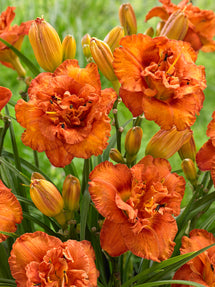
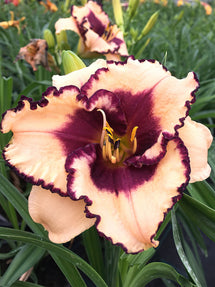
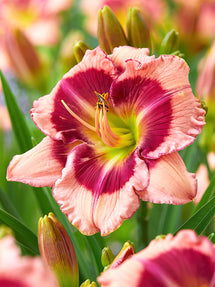
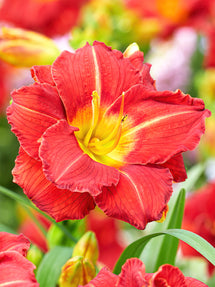
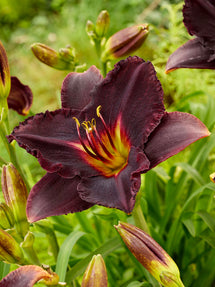
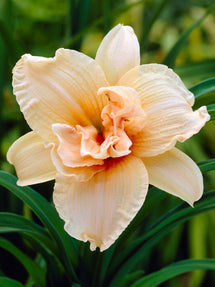
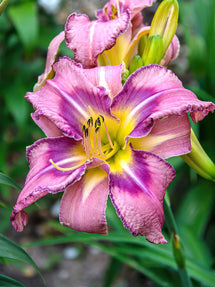
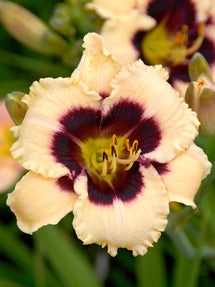
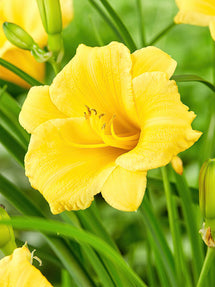
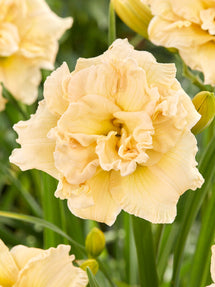
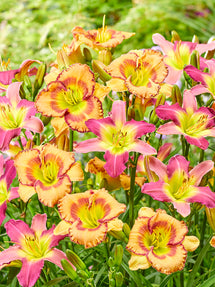
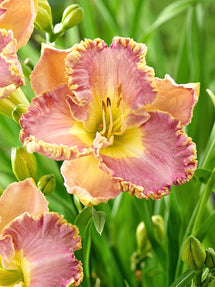
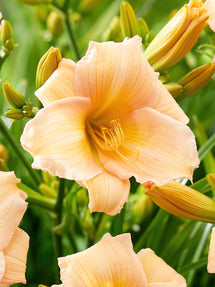
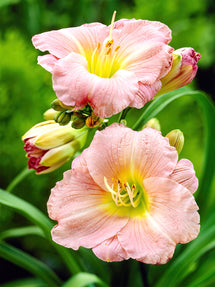
Daylily (Hemerocallis): the easy perennial that flowers all summer
The daylily is one of the most generous and good natured perennials you can grow. From a lush fountain of slender, arching leaves it sends up large, trumpet shaped flowers all through the height of summer, in yellow, orange, red, pink and purple. Each flower lasts a single day, hence the name, but new buds open one after another, so the plant stays in bloom for weeks.
Daylilies grow from a hardy perennial that you plant in spring. They thrive in sun to light shade, cope with almost any soil and come back year after year. Many are scented and rebloom later in the season too. For many colours at once, Fruity Kiss is an easy place to start.
Which daylily suits you?
 Yellow and goldSunny and dependable. The famous Stella d'Oro flowers in golden yellow almost all season and stays compact, while double Schnickel Fritz opens ruffled, cream yellow blooms.
 Orange and apricotWarm, soft tones. Double Double Dream in apricot and peach, coppery Awesome Luck and the dainty, apricot Mini Pearl.
 Red and darkDeep, saturated colour. Black Stockings in near black burgundy with a golden throat, and bright Booby Ruby in ruby red on tall, graceful stems.
 PinkSoft and romantic. Strawberry Shake in peachy pink with a red eye, and Soft Secrets in gentle lavender pink. Both bring a cooling note to the summer border.
 Lavender and purpleCool and elegant. Ruffled Lavender Tu Tu with a gold edge, Mildred Mitchell with a lavender eye and cream white Tropical Surprise with a wine red eye.
 Bicolour and mixFor a touch of contrast. Piano Man in cream yellow with a deep purple eye, and the cheerful Fruity Kiss, a mix of peach, pink, orange and yellow.
Flowering and the gardening year
Plant in spring, flowering through the height of summer. Many varieties rebloom for a second show later in the season.
Position and soil
The daylily is wonderfully easy going. It is happiest in a sunny spot but also does well in light shade, and it grows in almost any soil as long as it is not permanently waterlogged.
A humus rich, moderately moist soil gives the most flowers, but daylilies also take drier spots in their stride once established. That makes them a rewarding choice both in the border and in a larger pot.
How to plant
- Plant in spring, in sun or light shade.
- Dig a generous hole and set the plant so the crown sits just below the surface.
- Space plants 40 to 50 cm apart; the clumps grow broad over time.
- Firm the soil and water in well for the first while.
- Snap off yesterday's faded flowers if you like, though it is not essential.
Our tip: the daylily is one of the few perennials you really can plant and then almost forget. It needs no staking, little feeding and no coddling, and it is rarely troubled by pests. The one thing it appreciates is being lifted and divided every three or four years, in spring. That keeps the clump young and free flowering, and gives you new plants to spread around the garden for free.
DutchGrown, specialists in flower bulbs and perennials since 1882Year after year
Daylilies are hardy and very long lived. The clump grows larger and more free flowering year by year, and the same plant can stay put and flower for decades in the right spot.
Want more plants, or has a clump grown crowded? Simply divide it in spring with a spade. Each piece quickly grows away into a new, flowering plant.
Lovely with
Daylilies belong in the sunny border, among other summer perennials. They look superb beside Coneflowers and the fragrant heads of Phlox, which flower at the same time.
Just as fine threaded through low mounds of hardy Geranium and the fleshy foliage of Sedum, which carries the border on into autumn.
Order now, plant in spring
You can order daylilies now. We ship the plants from March, in good time for spring planting. They often flower in their first summer.
Shipped fresh from the Netherlands, by a family business since 1882.
Frequently asked questions about daylilies
When do daylilies flower?
Most daylilies flower in the height of summer, and many are reblooming, giving a second show later in the season. Stella d'Oro is one of the best known, flowering almost continuously from early summer into autumn.
Why does each flower last only a day?
The name says it: each flower opens in the morning and fades by evening. But every stem carries many buds that open in succession, so the plant stays in bloom for weeks on end.
What position do daylilies need?
Daylilies are among the toughest perennials of all. They thrive in full sun to light shade and cope with almost any soil, wetter or drier. They flower most freely in a sunny spot.
How tall do daylilies grow?
It depends on the variety. Compact Stella d'Oro stays around 30 cm, while taller sorts such as Strawberry Shake and Booby Ruby reach 70 to 120 cm. You will find the height on each variety's page.
Are daylilies hardy and perennial?
Yes, daylilies are hardy and remarkably long lived. The clump grows larger year by year and asks for almost no care. Lift and divide it every three or four years in spring to keep it vigorous.
Are daylilies tough and drought tolerant?
Very. Once established, a daylily shrugs off both dry spells and wet weather and is rarely troubled by pests. That makes it one of the most forgiving, low maintenance plants you can grow in a border.
Do daylilies attract bees and butterflies?
Yes, the large, open flowers are popular with bees and butterflies. Many varieties are also lightly fragrant, which makes them even more welcome in a pollinator friendly garden.
Are daylilies toxic?
For people the flowers are actually edible and used in cooking. For cats, however, they are highly toxic and can cause serious kidney damage, so if you have a cat it is best to keep it away from the plant. Note that true lilies, Lilium, are a different plant.