


Lupinus
Showing 1 - 6 in 6 items
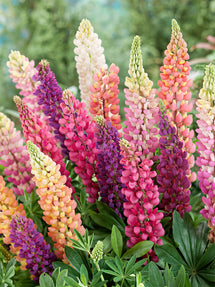
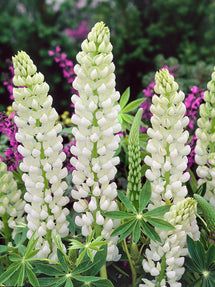
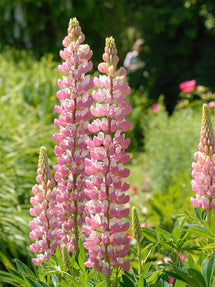
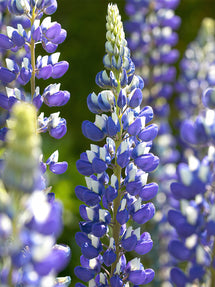
Lupins (Lupinus): bold, colourful spires for the early summer garden
Few perennials make an entrance like the lupin. In early summer it sends up tall, densely packed spikes of pea shaped flowers in blue, pink, red, yellow and white, above a handsome ruff of deeply divided leaves. A true cottage garden classic, and a stately cut flower for the vase.
Lupins grow from a hardy perennial that you plant in spring. Give them a sunny to lightly shaded spot in well drained soil and they return year after year. As a member of the pea family, the lupin also fixes nitrogen and improves the soil around it. For many colours at once, the Russell Hybrids are an easy place to start.
Which lupin suits you?
 The GovernorThe bold blue favourite. The Governor carries dense spikes of deep blue flowers with crisp white standards, 90 to 120 cm tall. A striking focal point and loved by bees.
 The ChatelaineThe Chatelaine bears tall spikes of rosy pink flowers topped with contrasting white. The blooms open from the bottom up over several weeks, and it makes a lovely cut flower.
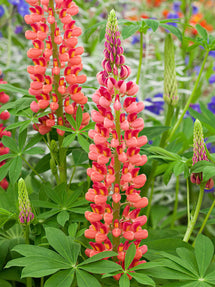
 My CastleAward winning and warm toned. My Castle glows in rich brick and carmine red on sturdy, erect spikes. It stands 90 to 120 cm and draws bees and butterflies.
 Noble MaidenElegant in ivory and pure white with a hint of cream. Noble Maiden carries densely packed, softly scented spikes and sits beautifully among stronger colours.
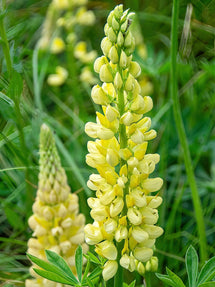
 ChandelierCheerful and sunny. Chandelier holds tightly packed spikes of clear yellow, pea shaped blooms above fresh green foliage. Happy in well drained soil in sun to light shade.
 Russell HybridsA blend of bright, classic colours on tall, imposing spikes. Russell Hybrids look their best planted in a group, in a cottage or naturalistic garden.
Flowering and the gardening year
Plant in spring, flowering in early summer. Cut the faded spikes before they seed and you often get a second, smaller flush.
Position and soil
Lupins like a sunny to lightly shaded spot in a well drained soil. They are at their best in a slightly poor, sandy, lime free soil and cope happily where more demanding plants struggle. Heavy, wet clay and very chalky ground are the things to avoid.
Lupins form a strong taproot and resent being moved. Choose the spot with care and plant them straight into their final position, so you never need to disturb the root later on.
How to plant
- Plant in spring, in a sunny to lightly shaded spot.
- Dig a generous hole and set the plant so the crown sits just below the surface.
- Space plants 40 to 50 cm apart; the clumps form broad rosettes in time.
- Firm the soil and water in well.
- Avoid feeding heavily, as lean soil gives sturdier spikes.
Our tip: cut each flower spike off as soon as it has gone over, before it has a chance to set seed. The plant then puts its strength into fresh buds rather than seed, and often rewards you with a second flush later in the summer. Just as usefully, it keeps the clump exactly where you want it and stops the lupin seeding itself around the garden where it is not wanted.
DutchGrown, specialists in flower bulbs and perennials since 1882Year after year
Lupins are hardy and perennial. Each plant usually lives for a few years and flowers most freely in its first seasons. Let the odd spike set seed if you would like self sown seedlings, but remember that seedlings rarely come true to the parent plant.
In autumn the foliage dies back. Clear around the plant in late autumn or early spring, so it stands ready to push up fresh new growth.
Lovely with
Lupins belong in the cottage garden border, among other early summer flowers. They look magnificent beside large, full Peonies and the silky blooms of Oriental Poppies, which flower at the same time.
Just as fine with Iris nearby and the dancing flowers of Columbine, which together make the perfect early summer picture.
Order now, plant in spring
You can order lupins now. We ship the plants from March, in good time for spring planting. They often flower in their first summer.
Shipped fresh from the Netherlands, by a family business since 1882.
Frequently asked questions about lupins
When do lupins flower?
Lupins flower in early summer, roughly through June and July, sending up tall, dense spikes above the foliage. If you cut the faded spikes off before they set seed, you will often get a second, smaller flush later in the summer.
What position and soil do lupins need?
Lupins like a sunny to lightly shaded spot in a well drained soil. They are happiest in a slightly poor, sandy, lime free soil and cope with lean conditions well. Heavy, wet clay and very chalky soils are the main things they dislike.
How tall do lupins grow?
Most of these border lupins reach around 90 to 120 cm in flower, with the spike standing well clear of the leaves. That height makes them a natural choice for the middle or back of a cottage style border.
Are lupins hardy and perennial?
Yes, lupins are hardy perennials that return each year. Each plant tends to live for a few years and flowers most strongly early on, so it is worth letting one or two spikes set seed, or planting a few fresh plants every couple of years.
How do I get lupins to flower again?
Cut each spike off as soon as it has finished, before it sets seed. The plant then puts its energy into new buds rather than seed, and often rewards you with a second flush. It also keeps the clump neat and stops it spreading by seed where you do not want it.
Do lupins attract bees?
Very much. The flower spikes are rich in pollen and a favourite of bees and bumblebees, so lupins are a fine choice for a pollinator friendly garden, bringing both height and movement to the early summer border.
Can I move or divide lupins?
It is best not to. Lupins form a deep taproot that resents disturbance, and older plants seldom move well. Plant them straight into their final position and leave them in peace, rather than lifting and dividing as you might other perennials.