


Lilies
Showing 1 - 22 in 22 items

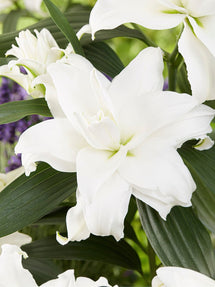
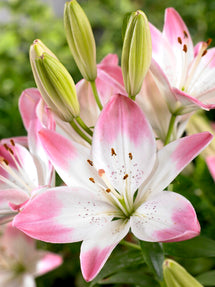

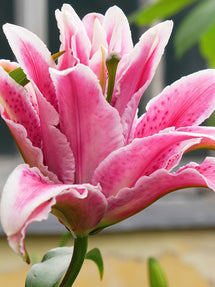
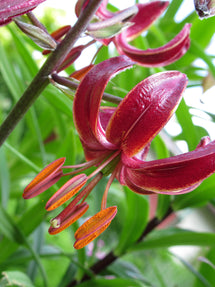

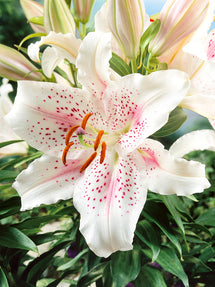



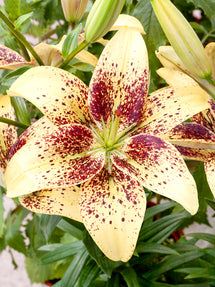
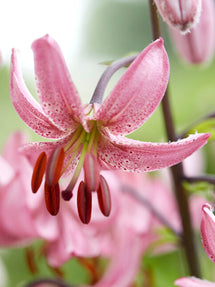


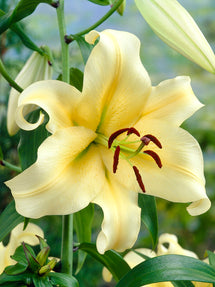





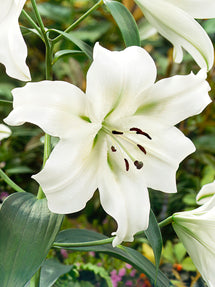
Lilies: big summer flowers, many of them scented
Lilies grow from true bulbs and give large, striking flowers right through the summer, many of them beautifully scented. There are several types, from the colourful, unscented Asiatic to the heavily perfumed Oriental and trumpet lilies, and the wild Martagon for shade.
You plant the bulbs in spring, in a sunny spot. Lilies are hardy and come back every year, usually with more flowers than the year before.
Which type of lily suits you?

 Oriental liliesThe largest and most strongly scented lilies, late in the summer. The classic is Star Gazer, alongside the soft Muscadet and the speckled Dizzy.
 Asiatic liliesEarly summer, in the boldest colours and with no scent. Easy and reliable. Try the near black Landini, the sunny Viva la Vida or Empoli.
 Trumpet liliesThe tallest lilies, with big trumpet shaped flowers and a heavy, sweet scent. African Queen is golden orange, Pretty Woman is pure white and can top a metre.
 Martagon, for shadeWild lilies with dozens of small, nodding turkscap flowers. The one lily that belongs in light shade. Such as Claude Shride, Peppard Gold and Candy Morning.
When each type flowers
Plant two or three types together for colour from early summer into autumn.
| Type | Scent | Height |
|---|---|---|
| Asiatic | none | 60 to 100 cm |
| Oriental | strong | 90 to 120 cm |
| Trumpet | strong | 100 to 180 cm |
| Double (Roselily) | sweet, pollen free | 80 to 100 cm |
| Martagon | light | 90 to 150 cm |
Planting, step by step
- Plant the bulbs in spring, once the ground is no longer frozen.
- Choose a sunny, free draining spot. Martagon prefers light shade.
- Plant deep: two to three times the height of the bulb, usually 10 to 15 cm.
- Space the bulbs 15 to 20 cm apart, pointed end up.
- Water in, and keep the soil from drying out while they grow.
Better every year
Lilies are true bulbs and fully hardy. Leave them in the ground and they come back each year with more stems and more flowers.
Cut off the spent flowers, but leave the stem and leaves until they yellow on their own. That is how the bulb builds strength for next year. A layer of compost in spring is all the feeding they need.
In a windy, open spot the tall trumpet and Oriental lilies may need a discreet stake. Plant them a little deeper, or among sturdier neighbours, and they mostly hold themselves up.
Our tip: plant lilies in groups of five to seven bulbs of one variety, not single bulbs dotted around. In a clump they lean on each other and read as one bold splash of colour, exactly how they look their best.
DutchGrown, flower bulb specialists since 1882Watch for the lily beetle
The lily beetle is a bright red beetle that feeds on the leaves. It is the one real pest of lilies.
Check your plants through spring and pick the beetles and their larvae off by hand. Start early and it stays easy to keep under control.
Poisonous to cats
Important if you have cats: all true lilies are extremely poisonous to them. Even a little pollen, or water from the vase, can be fatal.
If you keep cats indoors, do not use lilies as cut flowers, or choose the pollen free Roselily and keep it out of reach. For dogs and people the risk is much lower. Call your vet at once if a cat has eaten any part.
Order now, plant in spring
You can order lilies now. We send the bulbs out from March, in good time to plant. Lovely alongside dahlias and gladioli for a summer full of colour.
Shipped fresh from the Netherlands by a family company since 1882.
Frequently asked questions about lilies
When do lilies flower?
From June to August, depending on the type. Asiatic lilies come first, Martagon follows, and the Oriental and trumpet lilies close the summer. Plant a few types together and you have lilies right through the season.
When should I plant lily bulbs?
In spring, as soon as the ground is no longer frozen. We send the bulbs out from March, in good time to plant. Plant them quickly once they arrive, because lily bulbs must not dry out.
How deep do you plant lily bulbs?
Deep. Allow two to three times the height of the bulb, usually about 10 to 15 cm of soil above it. Lilies also make roots on the stem above the bulb, so depth matters. Space the bulbs 15 to 20 cm apart.
Do lilies come back every year?
Yes, lilies are hardy and return for years, often with more flowers each season. Leave the foliage after flowering until it yellows on its own, so the bulb can build strength for next year.
Which lilies are scented and which are not?
Oriental lilies, trumpet lilies and the double Roselily are strongly scented. Asiatic lilies have no scent, handy if you love the colour but not a heavy perfume indoors. Martagon has only a light scent.
Are lilies poisonous to cats?
Yes, and it is serious. All true lilies are extremely poisonous to cats. Even a little pollen, a leaf, or water from the vase can cause kidney failure. If you have cats, keep lilies out of the house, or choose the pollen free Roselily and keep it well out of reach. Call your vet straight away if a cat has swallowed any part.
What is the lily beetle and what do I do about it?
A bright red beetle that chews holes in the leaves. It is the one real pest of lilies. Check your plants regularly through spring and pick the beetles and their larvae off by hand. Starting early keeps it easy to manage.
Which lily grows in shade?
Most lilies want sun, but the Martagon is the exception: it belongs in light shade, under trees or at the back of a border. Ideal for a spot where Asiatic and Oriental lilies would struggle.
Can you grow lilies in a pot?
Yes, Asiatic and double lilies in particular do well in a pot. Use a roomy pot with drainage holes and free draining compost, and do not let it dry out.