


Eupatorium (Common Boneset)
Showing 1 - 3 in 3 items
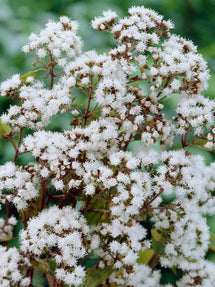
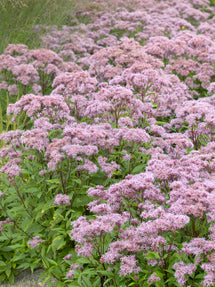
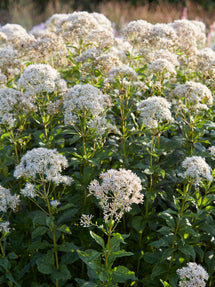
Eupatorium (Boneset): a late summer feast for bees and butterflies
If you want to fill the late summer garden with butterflies, few plants do it like eupatorium. Also known as boneset, hemp agrimony and Joe Pye weed, it lifts broad, fluffy flower heads in white, mauve and soft purple on tall, strong stems, and each one hums with bees, butterflies and hoverflies from July into autumn.
Eupatorium grows from a hardy perennial crown that you plant in spring. It loves a sunny or lightly shaded spot in a soil that stays moist, holds itself up without staking, and comes back bigger every year. For the deepest foliage and brightest wildlife value, the dark leaved Chocolate is a favourite.
Which eupatorium suits you?
 ChocolateDark leaves, white flowers. Chocolate unfurls deep chocolate purple young foliage, then foams with fluffy white flower heads in late summer. At around 100 to 120 cm it is the most shade tolerant of the three and alive with bees.
 Purple BlushThe stately giant. Purple Blush rises to 120 to 150 cm and crowns its reddish stems with big, domed heads of soft mauve purple flowers, a true butterfly magnet for the back of a sunny border.
 SnowballClouds of white. Snowball carries rounded, fluffy white flower heads above fresh green foliage at around 100 to 120 cm, lighting up the late summer border and drawing bees and butterflies in numbers.
Flowering and the gardening year
Plant the crowns in spring, flowering through the second half of summer into early autumn. Leave the seed heads standing for winter structure and the birds.
Position and soil
Eupatorium is at its best in full sun to light shade, in a soil that stays reliably moist. By nature it is a plant of damp meadows and streamsides, so it rewards you most where the ground never bakes dry.
It is not fussy about soil type as long as it holds moisture. Dig in compost before planting on lighter ground, and the dark leaved Chocolate will happily take a shadier spot than the others.
How to plant
- Plant the crowns in spring, in sun to light shade.
- Dig a generous hole and set the crown just below the surface.
- Spread the roots out, firm back the soil and water in well.
- Space plants about 60 to 80 cm apart; they form bold clumps.
- Keep the soil moist, especially through the first summer.
Our tip: plant eupatorium in a generous group rather than dotting single plants about, because a bold drift in full flower becomes a genuine cloud of butterflies on a warm August day. When autumn comes, resist the urge to tidy it away: leave the tall stems and seed heads standing right through winter. They hold the border together, feed seed eating birds, and look wonderful rimmed with frost. One clean cut back to the base in early spring is all the pruning it ever needs.
DutchGrown, specialists in flower bulbs and perennials since 1882Year after year
Eupatorium is a hardy, long lived perennial. It dies back in winter and returns every spring, growing into a larger, fuller clump season by season. The same plant can hold its spot and improve for many years.
Want more, or has a clump grown very large? Lift and divide it in spring with a spade. Each piece quickly grows away into a new, flowering plant.
Lovely with
Eupatorium belongs in the sunny wildlife border, among other late summer nectar plants. It is magnificent beside Coneflowers and the fragrant heads of Phlox, which flower at the same time.
Just as fine with the bee loved whorls of Bee Balm and the fleshy, late flowering Sedum, which carries the pollinators on into autumn.
Order now, plant in spring
You can order eupatorium now. We ship the crowns from March, in good time for spring planting, ready to flower and draw the butterflies in late summer.
Shipped fresh from the Netherlands, by a family business since 1882.
Frequently asked questions about eupatorium
When does eupatorium flower?
Eupatorium flowers in the second half of summer and on into early autumn, roughly from July to September. Its big, fluffy flower heads open just as many early summer plants are fading, carrying colour and life late into the season.
Why is eupatorium so good for wildlife?
It is one of the very best plants you can grow for pollinators. The broad, nectar rich flower heads are covered in bees, butterflies and hoverflies through late summer, and the seed heads that follow feed birds into winter. For a wildlife or pollinator garden it is hard to beat.
What position and soil does eupatorium need?
Give it a sunny or lightly shaded spot in a soil that stays reliably moist. It is a plant of damp meadows and streamsides by nature, so it dislikes hot, dry ground. The dark leaved Chocolate is the most tolerant of shade of the three.
How tall does eupatorium grow?
It depends on the variety. Chocolate and Snowball reach around 100 to 120 cm, while the stately Purple Blush can touch 150 cm. The taller sorts make fine structural plants for the middle or back of a border, holding themselves up well without staking.
Is eupatorium hardy and perennial?
Yes, eupatorium is a fully hardy, long lived perennial. It dies back in winter and returns each spring, forming a bigger, more generous clump year after year. It is tough, reliable and needs very little from you once established.
How do I care for eupatorium?
Very little is needed. Keep the soil from drying out in summer, and otherwise leave the plant to get on with it. Resist cutting it down in autumn: the standing stems and seed heads give winter structure and feed the birds. Simply cut the old growth back to the base in early spring.
Is eupatorium good for naturalistic planting?
Perfectly suited to it. With its height, airy flower heads and long season, eupatorium is a mainstay of prairie style and wildlife borders, beautiful planted in bold drifts among ornamental grasses and other late perennials. The spent heads also look lovely touched with frost.
Is eupatorium toxic?
Eupatorium is grown as an ornamental and is not meant to be eaten; the plant contains compounds that are toxic if ingested. The related white snakeroot is well known for being poisonous to grazing livestock, so keep it away from animals that might eat it, and wash your hands after handling or cutting it.